Culture, food & languages
Morocco, explained
Between the Mediterranean, the Atlantic, the Atlas and the Sahara, Morocco layers centuries of Amazigh, Arab, Andalusian and Jewish culture. Here's the essential guide to travelling curious — and eating well.
Moroccan cuisine
One of the world's great cuisines, built on fresh produce, spices and patience.
Tagine
The iconic slow-cooked dish, steamed under its conical lid: lamb with prunes, chicken with preserved lemon, kefta with eggs…
Couscous
Friday is sacred: hand-rolled semolina, seasonal vegetables and meat, shared with the whole family.
Harira
A tomato, lentil and chickpea soup — the star of winter evenings and of breaking the fast.
Pastilla
A sweet-savoury pastry with pigeon or chicken, almonds and cinnamon. A direct heir of Al-Andalus.
Mint tea
Far more than a drink: a ritual of hospitality. Refusing a glass is nearly impossible — happily so.
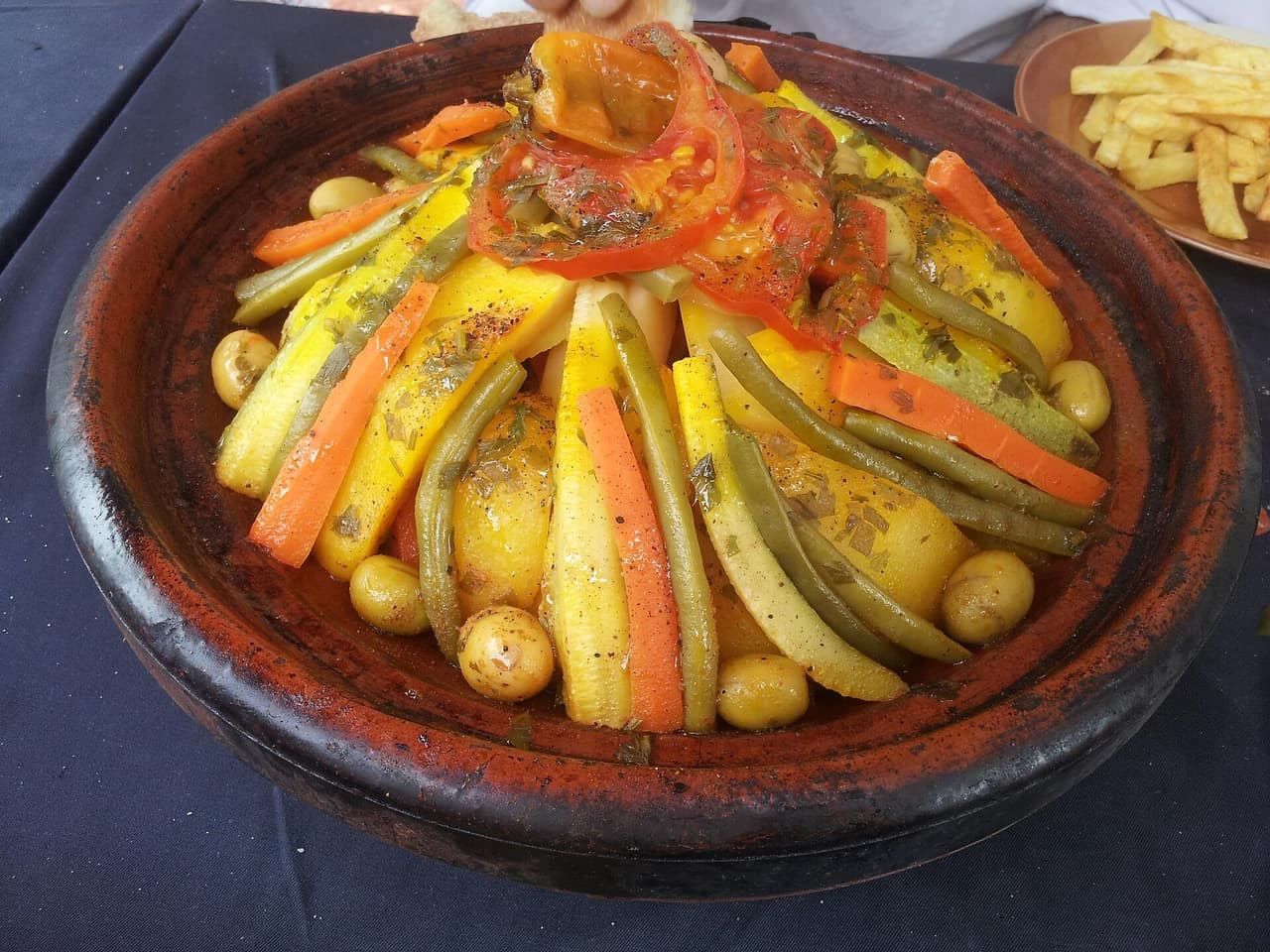
Photo: Khammal92 · CC BY-SA 4.0 · Wikimedia Commons
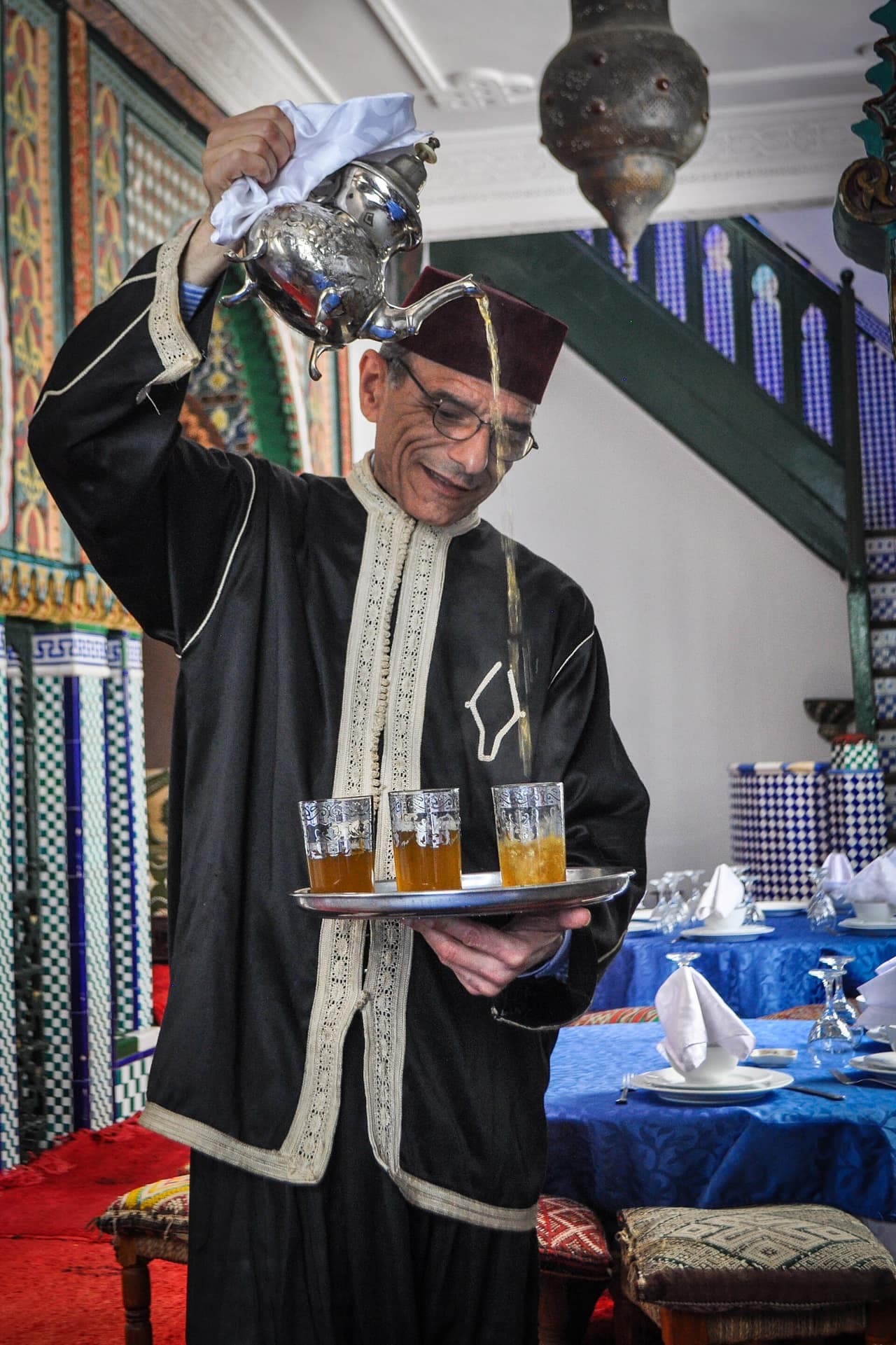
Photo: katiebordner · CC BY 2.0 · Wikimedia Commons
Culture & traditions
Morocco is something you live, not just visit.
Medinas & souks
Living labyrinths on the UNESCO list: leather, wood, copper and zellige artisans work as they did centuries ago.
Hammam
The weekly steam bath, as much social institution as self-care. Try the kessa glove and black soap.
Music
Gnawa in Essaouira, chaabi at weddings, Andalusian in Fes: every region has its own soundtrack.
Hospitality
“Marhba” — welcome. Guests are sacred: expect to be fed, refilled, and invited back.
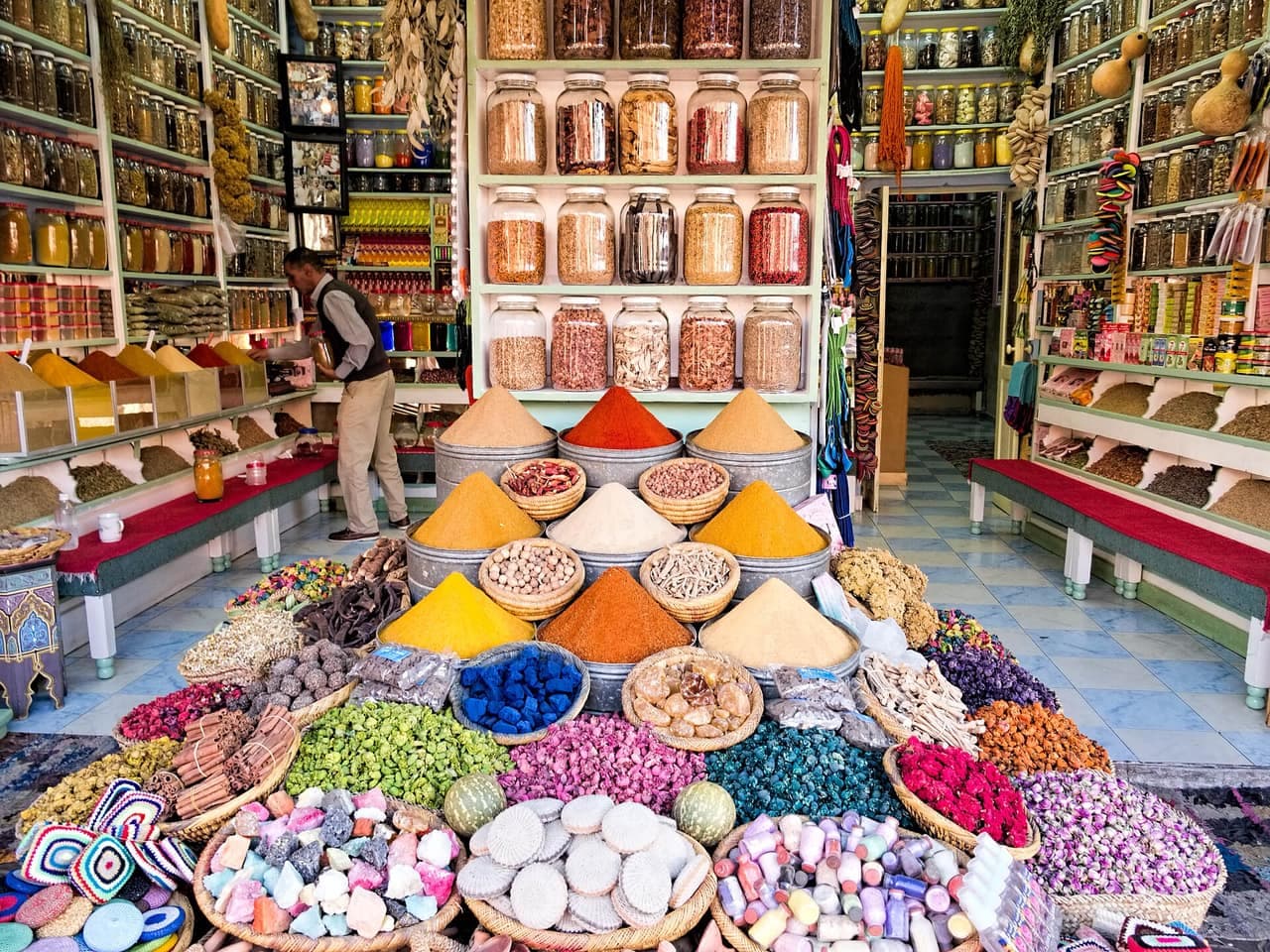
Photo: Dan Lundberg · CC BY-SA 2.0 · Wikimedia Commons
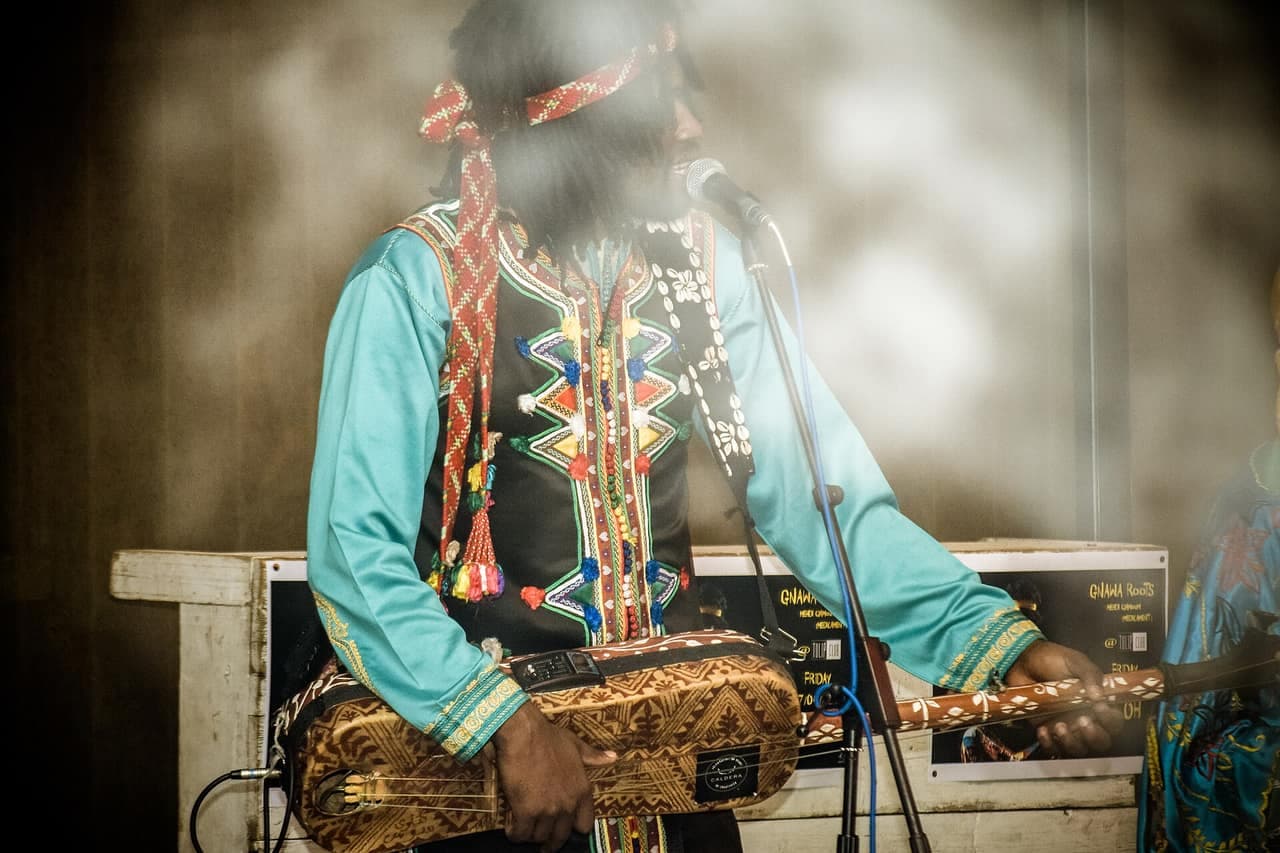
Photo: Monaam Ben Fredj · CC BY-SA 4.0 · Wikimedia Commons
Languages & accents
Morocco is thoroughly multilingual — people switch languages mid-sentence.
Darija
Moroccan Arabic, the language of daily life: a blend of Arabic, Amazigh, French and Spanish. “Labass?” = how are you?
Tamazight
The Amazigh (Berber) languages — Tarifit in the north, Tamazight in the centre, Tachelhit in the south — co-official since 2011.
French
Widespread in cities, administration and business: you'll be understood almost everywhere.
Spanish & English
Spanish lives on in the north (Tangier, Tetouan), a shared-history heritage; English is growing fast among the young.
Good to know
Currency
The dirham (MAD). Cash rules the souks; cards work in city hotels and restaurants.
Getting around
Fast trains (Al Boraq Tangier–Casablanca), grands taxis between cities, petits taxis in town — agree the fare or insist on the meter.
When to come
Spring and autumn are perfect everywhere. Summer: head for the coast; winter: the south and the desert.
Haggling
In the souk it's an expected game: smile, offer half, have some tea — everybody wins.